
10th IEEE INTERNATIONAL TEST CONFERENCE INDIA
2026
JULY 19-21, 2026 | RADISSON BLU, MARATHAHALLI, BENGALURU
TUTORIALS
Customer Centric Post Silicon Validation Approach for System on Chip (SoC)

Ravishankar Manishankar
Intel
Ravishankar Manishankar is a validation expert at Intel with over 21 years of experience spanning System-on-Chip platform validation, functional validation, and embedded wireless software development. Throughout his career, he has worked extensively in areas including PCIe, CXL, customer platform validation, benchmark enablement, and DSP firmware systems engineering across 2G, 3G, 4G, and DAB technologies. He also brings valuable academic experience from the United States, where he conducted research and taught advanced wireless communication topics.
His extensive background across silicon validation, software development, and customer platform enablement has provided him with a holistic understanding of the challenges involved in bringing complex SoCs to market. This combination of technical depth and real-world deployment experience gives him unique insight into customer-centric post-silicon validation methodologies and the tools, processes, and strategies required to ensure successful silicon qualification and deployment.

Siloni Palani
Intel
Siloni Palani is a validation engineer at Intel with over nine years of experience in pre-silicon and post-silicon validation for data center GPUs and complex SoCs. Her expertise spans concurrency testing, platform validation, LPDDR5 memory systems, validation tool development, and automation frameworks. She has played a key role in hardware bring-up activities and system-level validation efforts focused on enhancing product quality and debug efficiency.
Through her work on complex silicon platforms, validation infrastructure, and automation-driven workflows, she has developed deep expertise in identifying, diagnosing, and resolving system-level issues throughout the product lifecycle. Her experience provides valuable perspectives on modern validation practices and the importance of scalable, customer-focused approaches to post-silicon validation in increasingly sophisticated semiconductor systems.
As System-on-Chip (SoC) designs become increasingly complex, ensuring reliable silicon deployment requires a comprehensive validation strategy that extends well beyond fabrication and pre-silicon verification. Post-Silicon Validation (PSV) plays a critical role in bridging the gap between design intent and real-world customer usage, enabling early issue detection, efficient debug, and improved product quality. This tutorial provides a practical overview of customer-centric PSV methodologies, covering silicon bring-up, design-for-debug infrastructure, validation planning, benchmark-driven testing, and unified software frameworks that support both pre- and post-silicon environments. Attendees will gain insights into industry-standard validation flows, debug techniques, and test reuse strategies that accelerate product readiness while improving system reliability and customer experience.
The Seamless Integration of Packetized Scan and In-System Test with Advanced ATE Equipment

Lee Harrison
Siemens EDA
Lee Harrison is Director of Product Marketing within Siemens Tessent Division, bringing over 25 years of experience in Design-for-Test technologies and semiconductor test solutions. Throughout his career, he has worked extensively with Tessent DFT products, focusing on emerging requirements in functional safety, security, automotive electronics, and high-performance computing applications. His efforts have helped ensure that evolving customer needs are translated into scalable and effective DFT methodologies.
His extensive experience working at the intersection of semiconductor design, test, safety, and reliability has provided him with valuable insights into the industry's transition toward more intelligent and integrated test solutions. This perspective enables him to address the growing importance of packetized scan architectures and in-system testing in modern semiconductor products.

Peter VanDenBosch
Siemens EDA
Peter VanDenBosch is Product Director for Tessent Streaming Scan Network (SSN) and Tessent In-System Test (IST) at Siemens, where he has played a pivotal role in the development, deployment, and industry adoption of advanced structural test technologies. Since joining Siemens in 2018, he has helped define SSN implementation methodologies and guided numerous successful customer deployments, enabling significant reductions in test cost and test data volume.
With nearly three decades of experience in Design-for-Test and leadership roles across companies including Marvell, Micron Technology, STMicroelectronics, and LSI Logic, Peter has developed deep expertise in scan architectures, ATE integration, high-speed I/O-based test delivery, and in-field test applications. His hands-on involvement in shaping next-generation test methodologies gives him a unique perspective on how packetized scan and in-system test technologies are transforming semiconductor manufacturing and lifecycle management.
As semiconductor devices continue to increase in complexity, reducing test cost while maintaining high quality and reliability has become a key industry challenge. Emerging technologies such as packetized scan architectures and in-system test methodologies are transforming how structural tests are delivered, enabling more efficient use of Automatic Test Equipment (ATE), reducing test data volume, and extending test capabilities beyond manufacturing into system-level and in-field environments. This tutorial provides an overview of packetized ATPG data generation, configuration, and deployment, highlighting how seamless integration with advanced ATE platforms supports scalable test delivery, enhanced diagnostics, data logging, and long-term product reliability throughout the silicon lifecycle.
Mission Mode Scan Dump Using IJTAG and TAP Customization: Architecture, Implementation, and Practical Considerations

Sreekanth G Pai
Senior Principal Engineer
Sreekanth G Pai is a Senior Principal Engineer with extensive experience in Design-for-Test, scan architectures, IJTAG infrastructures, and post-silicon debug methodologies for complex SoCs. Throughout his career, he has led and contributed to multiple large-scale silicon programs, developing expertise in TAP customization, mission-mode debug techniques, and Tessent-based DFT implementations.
His work in enabling robust observability, debuggability, and secure access mechanisms across advanced validation and test environments has provided him with deep insight into the challenges of modern post-silicon debug. This experience makes him well positioned to discuss scalable IJTAG-based approaches for mission-mode scan dump and advanced debug architectures.

Raseena K A
Senior Engineer
Raseena K A is a Senior Engineer specializing in DFT implementation, scan architectures, and post-silicon debug for complex SoCs. Her experience includes the development of IJTAG-based infrastructures, scan dump enablement, clock and OCC interactions, and customized debug solutions tailored to mission-mode applications.
Through her work on silicon bring-up and debug using advanced scan and test methodologies, she has developed strong expertise in practical debug execution and validation workflows. Her hands-on experience provides valuable perspectives on implementing efficient, scalable, and reliable scan dump solutions for modern semiconductor systems.
As modern SoCs continue to grow in scale and complexity, effective post-silicon debug has become a critical challenge for ensuring rapid issue resolution and successful product deployment. Traditional test infrastructures often lack the observability required during mission-mode operation, creating the need for more flexible and scalable debug methodologies. This tutorial explores the use of IEEE 1687 (IJTAG) and TAP customization to enable mission-mode scan dump capabilities, providing efficient access to internal silicon states with minimal design impact. Attendees will gain insights into IJTAG-based architectures, scan data extraction techniques, implementation challenges, verification strategies, and practical considerations for enhancing observability and debuggability in advanced semiconductor designs.
Scalable ATE Hardware Design: From Concept to Manufacturing with Reusable Architecture

Lokapriya Balakrishnan
Test Engineer at Caliber Interconnect Solutions
Lokapriya Balakrishnan is a Test Engineer at Caliber Interconnect Solutions with over seven years of experience in semiconductor testing and ATE interface hardware development. Her work spans turnkey load board and probe card design, signal and power integrity optimization, device testing, and tester platform conversion projects. In addition to her technical contributions, she has successfully led engineering teams in delivering high-quality hardware solutions within demanding development schedules.
Her experience across both hardware development and semiconductor validation provides her with a unique perspective on the challenges of designing scalable, high-performance ATE solutions. This expertise enables her to bridge the gap between hardware architecture, test requirements, and manufacturing realities.

Senthilkumar Dhamodharan
Director of Semiconductor Test Engineering at Caliber Interconnect Solutions
Senthilkumar Dhamodharan is Director of Semiconductor Test Engineering at Caliber Interconnect Solutions, where he leads large-scale test engineering operations spanning SoC, PMIC, Digital, Mixed-Signal, and RF products. With more than 19 years of experience at industry leaders including Qualcomm, AMD, and NXP, he has played a significant role in advancing semiconductor test methodologies, engineering strategy, and intellectual property development.
His extensive experience managing complex validation programs and building high-performance engineering teams has given him deep insight into scalable test infrastructure and hardware development. This perspective makes him uniquely positioned to address the challenges of creating efficient, reusable ATE architectures for modern semiconductor products.

Vaishnavi
Senior Test Engineer at Caliber Interconnect Solutions
Vaishnavi is a Senior Test Engineer at Caliber Interconnect Solutions with over a decade of experience in testing SoC, Mixed-Signal, and RF devices across both bench and ATE environments. Currently leading Caliber's RF team, she has developed strong expertise in device characterization, validation methodologies, and high-performance test execution.
Her extensive hands-on experience across multiple semiconductor domains provides valuable insight into the practical challenges of ATE deployment and validation. This background enables her to contribute a real-world perspective on designing scalable hardware solutions that improve efficiency, reliability, and test coverage.
As semiconductor devices continue to push the boundaries of speed, power, and integration, the complexity of Automated Test Equipment (ATE) hardware design has increased significantly. Achieving reliable signal and power integrity while maintaining scalability, cost efficiency, and rapid deployment is now a critical requirement for successful device validation. This tutorial presents a comprehensive approach to designing robust ATE hardware, covering Device Interface Boards (DIBs), SI/PI methodologies, simulation-driven design practices, manufacturing readiness, and validation workflows. A key focus is the adoption of reusable hardware architectures based on modular motherboard-daughtercard concepts, enabling faster development cycles, improved scalability, and enhanced first-time-right success across diverse semiconductor product families.
Machine Learning is Inevitable or Not: A DFT Designer’s View
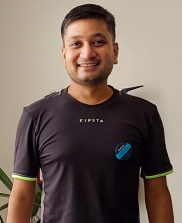
Ankush Srivastava
Qualcomm
Ankush Srivastava is a semiconductor test expert with over 19 years of industry experience and currently leads the development of advanced Design-for-Test methodologies for Qualcomm's cutting-edge SoCs. Holding a doctorate from IIT Bombay and a degree from BITS Pilani, he has made significant contributions to semiconductor test technology through numerous patents, technical publications, intellectual property developments, and presentations at leading international conferences.
His extensive work in DFT automation, test optimization, and next-generation validation methodologies has given him deep insight into the evolving intersection of machine learning and semiconductor testing. As an active contributor to the global test community through organizations such as ITC, ATS, VLSI Design, and VDAT, Ankush brings a practical and forward-looking perspective on how AI can be effectively leveraged to improve DFT productivity, test quality, and silicon success.
Artificial Intelligence and Machine Learning are rapidly transforming engineering workflows across the semiconductor industry, creating both new opportunities and new challenges for Design-for-Test (DFT) engineers. As modern SoCs continue to increase in complexity, traditional DFT methodologies face growing demands for faster turnaround times, improved test quality, lower power consumption, and reduced defective-parts-per-million (DPPM). This tutorial explores the practical application of machine learning in DFT, covering areas such as ATPG optimization, test point insertion, test coverage enhancement, IR-drop analysis, and intelligent DFT automation. It also examines the emerging role of AI-driven assistants and large language models in streamlining DFT workflows, while providing a balanced perspective on where machine learning can deliver meaningful value—and where engineering expertise remains indispensable.
LLM for VLSI Design, Automation and Test

Dr. Chandan Karfa
Associate Professor, IIT Guwahati
Dr. Chandan Karfa is an Associate Professor in the Department of Computer Science and Engineering at IIT Guwahati, where his research spans electronic design automation, formal verification, hardware security, high-level synthesis, and formal methods. Prior to joining academia, he spent five years as a Senior R&D Engineer at Synopsys, gaining valuable industry experience in semiconductor design automation. A prolific researcher, he has authored more than eighty publications in leading international journals and conferences and has been recognized with several prestigious honors, including the Google India Research Award, Google Silicon Research Awards, Qualcomm Faculty Award, and multiple innovation and best paper awards.
His unique combination of academic research and industrial experience provides him with deep insight into both the challenges and opportunities facing modern semiconductor design flows. Through his work at the intersection of EDA, formal methods, and AI-driven automation, Dr. Karfa brings a forward-looking perspective on how LLMs can transform VLSI design, verification, and test while enhancing the productivity of the next generation of semiconductor engineers.
The growing complexity of modern semiconductor systems is placing unprecedented demands on design, verification, and test workflows. As chips scale to billions of transistors and increasingly heterogeneous architectures, traditional EDA methodologies require significant manual effort and domain expertise to meet aggressive performance, power, and time-to-market targets. This tutorial explores how Large Language Models (LLMs) are emerging as powerful assistants for VLSI engineers, enabling higher levels of automation across RTL design, verification, synthesis, debugging, and test generation. Rather than replacing conventional EDA flows, the session examines how LLMs can augment engineering productivity, streamline development cycles, and redefine the way designers, verification engineers, and test professionals interact with semiconductor design tools in the AI era.
Testing to Self Testing: Self Test Driven Functional Safety for ISO 26262 Compliant Automotive SoCs
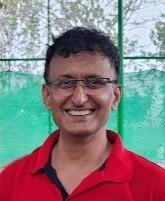
Rajesh Kumar Tiwari
Director of Engineering at Qualcomm India
Rajesh Kumar Tiwari is Director of Engineering at Qualcomm India, with over 22 years of experience in semiconductor design and Design-for-Test technologies. Over the course of his career at Qualcomm and Texas Instruments, he has led the development of advanced DFT architectures, in-system BIST solutions, and test methodologies across mobile, compute, and automotive platforms. He is also an active contributor to the semiconductor test community through his involvement with IEEE initiatives and technical innovations.
His extensive experience in deploying self-test and safety-focused DFT solutions for complex SoCs has given him deep insight into the challenges of achieving functional safety in modern automotive systems. This expertise positions him uniquely to discuss the evolving role of self-test technologies in enabling ISO 26262-compliant semiconductor designs.

Mohammed Zuber P Malek
Senior Staff Engineer and Manager at Qualcomm India
Mohammed Zuber P Malek is a Senior Staff Engineer and Manager at Qualcomm India with more than 17 years of experience in Design-for-Testability. Having contributed to over twenty successful chip tape-outs, he has developed extensive expertise across in-system BIST, scan synthesis, ATPG, low-power testing, TestSTA, and RTL-level DFT integration. He currently leads Qualcomm's Auto-DFT methodology and TestSTA initiatives, driving scalable and robust test solutions for advanced SoC programs.
His work in architecting automated DFT methodologies and self-test infrastructures for complex silicon platforms has provided him with valuable insight into the intersection of functional safety, diagnostics, and test automation. This experience enables him to offer practical perspectives on leveraging self-test technologies to meet the reliability and compliance requirements of next-generation automotive systems.
As automotive systems evolve into software-defined, safety-critical computing platforms, ensuring functional safety throughout a vehicle's lifecycle has become a fundamental requirement. Traditional manufacturing and validation testing alone are no longer sufficient to meet the stringent demands of ISO 26262 compliance. This tutorial explores how Built-In Self-Test (BIST) technologies are transforming functional safety architectures by enabling continuous in-field fault detection, diagnostics, and reliability monitoring. Covering logic BIST, memory BIST, mission-mode testing, and safety-driven test strategies, the session provides practical insights into designing scalable, standards-compliant automotive SoCs capable of delivering robust safety assurance from silicon to system.
Squeezing Quality into Cents: DFT Strategies for Low-Cost MCUs

Vishal Diwan
Digital Design Manager, Texas Instruments
Vishal Diwan is a Digital Design Manager and Member Group Technical Staff at Texas Instruments, where he leads the DFT team for the ASM Business Unit. With over 13 years of experience in Design-for-Test methodologies, he has developed deep expertise across scan architectures, test automation, and advanced DFT implementation strategies for semiconductor products. He holds a Master's degree in Electrical Engineering from IIT Bombay and has contributed extensively to the field through multiple patents, technical publications, and presentations at industry conferences.
His experience in developing efficient DFT solutions for cost-sensitive, high-volume semiconductor products has given him valuable insight into the trade-offs between test quality, silicon area, test time, and manufacturing cost. This practical perspective enables him to provide a comprehensive view of how innovative DFT methodologies can help deliver reliable MCUs while meeting the aggressive cost targets demanded by today's semiconductor industry.
Low-cost microcontrollers form the backbone of today's connected world, powering applications across IoT, automotive, industrial, and consumer markets. However, delivering high-quality, reliable MCUs at massive production volumes requires balancing stringent cost targets with demanding quality and safety requirements. This tutorial explores Design-for-Test strategies specifically tailored for cost-sensitive MCU designs, addressing challenges such as minimizing silicon overhead, reducing test time, optimizing ATE utilization, managing test power, and maximizing manufacturing throughput. Through practical examples and real-world methodologies, attendees will gain valuable insights into achieving high test coverage and low DPPM while operating within the tight area, power, and cost constraints that define modern MCU development.
Advanced Test Data Analytics for Yield and Quality Improvement

Shamitha Rao
Director of Solutions Engineering at Synopsys
Shamitha Rao is Director of Solutions Engineering at Synopsys, where she leads customer engagements for the TestMAX product portfolio. With more than 20 years of experience spanning DFT architecture, implementation, silicon validation, and test solutions, she has held key roles at Synopsys, Intel, Siemens EDA, STMicroelectronics, and Wipro. Her contributions to semiconductor test technology have been recognized through multiple technical publications, conference presentations, and industry awards.
Her extensive experience across the semiconductor lifecycle—from design and test architecture to silicon bring-up and manufacturing—provides her with a unique perspective on how advanced analytics can be leveraged to improve product quality, yield learning, and test efficiency in modern semiconductor ecosystems.

Shrestha Hota
Staff Solutions Engineer at Synopsys
Shrestha Hota is a Staff Solutions Engineer at Synopsys with over a decade of experience in semiconductor manufacturing analytics and yield engineering. She specializes in architecting analytics frameworks that enable yield optimization, root-cause analysis, and operational efficiency across high-volume manufacturing environments. Her work focuses on deploying advanced analytics platforms that transform complex manufacturing data into actionable insights.
Through her leadership in customer engagements and data-driven manufacturing initiatives, she has developed deep expertise in applying analytics to solve real-world semiconductor production challenges. This experience positions her at the forefront of modern yield engineering and intelligent manufacturing solutions.

Navya Rastogi
Staff Applications Engineer at Synopsys
Navya Rastogi is a Staff Applications Engineer at Synopsys with expertise spanning semiconductor process engineering, yield analysis, fabrication technologies, and data science. Prior to joining Synopsys, she gained experience in both the semiconductor capital equipment industry and at Amazon, bringing a multidisciplinary perspective to advanced manufacturing analytics. She holds a PhD in Nanoscience from the Indian Institute of Science.
Her background across semiconductor processes, yield engineering, and data-driven problem solving provides her with valuable insight into the application of analytics for improving manufacturing performance and product quality in advanced semiconductor technologies.

Soumya Mital
Staff Engineer at Qualcomm
Soumya Mital is a Staff Engineer at Qualcomm specializing in AI-driven diagnostic intelligence for next-generation semiconductor platforms. His work focuses on developing scalable frameworks that automate failure analysis and transform complex diagnostic data into actionable engineering insights, accelerating silicon development and deployment. He holds a PhD from Carnegie Mellon University and is an alumnus of IIT Roorkee.
His expertise at the intersection of semiconductor diagnostics, artificial intelligence, and large-scale data analysis has enabled him to drive innovative approaches to yield learning and quality improvement. This experience provides him with a unique perspective on how advanced analytics and AI are reshaping semiconductor manufacturing and test methodologies.
As semiconductor technologies continue to scale and heterogeneous integration becomes increasingly prevalent, the volume and complexity of test and manufacturing data have grown exponentially. Extracting actionable insights from this data has become essential for accelerating yield ramp, improving product quality, reducing scrap, and enhancing manufacturing efficiency. This tutorial explores modern data analytics methodologies within the Silicon Lifecycle Management (SLM) framework, covering advanced statistical techniques, machine learning applications, root-cause analysis, yield monitoring, and real-time quality management. Attendees will gain practical insights into leveraging both local and cloud-based analytics platforms to transform vast semiconductor test datasets into data-driven decisions that improve yield, reliability, and operational excellence.
Closed Loop Test Engineering – From Design to Mass Production
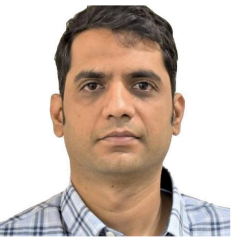
Maheedhar Jalasutram
Google Silicon Team
Maheedhar Jalasutram leads DFT Architecture within Google's Silicon team, where he is responsible for developing scalable test architectures that balance quality, coverage, and test cost for advanced mobile SoCs. Throughout his career, including leadership roles at Google and Texas Instruments, he has driven innovations in concurrent testing, design-for-debug, high-speed test methodologies, and system-level test enablement.
His extensive experience spanning DFT architecture, validation, and production test has provided him with deep insight into the challenges of delivering high-quality silicon at scale. This expertise enables him to offer a unique perspective on how test methodologies can be integrated across the entire product lifecycle to improve both quality and manufacturing efficiency.
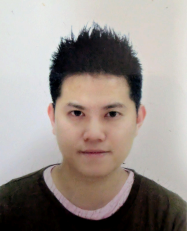
Chiehjen (Jeren) Ku
Chiehjen (Jeren) Ku leads the Foundry, Assembly Process, and Yield Engineering team within Google's Custom Silicon Operations organization. He oversees manufacturing operations, yield improvement, process optimization, quality management, and product ramp activities for Google's custom silicon programs. Prior to Google, he held leadership positions at Intel and TSMC, focusing on advanced semiconductor process technologies, including FinFET and Gate-All-Around transistor development.
His experience across process technology development, manufacturing operations, and yield engineering has given him a comprehensive understanding of how design, fabrication, and production data interact to influence product quality. This background provides valuable insight into building closed-loop methodologies that accelerate yield learning and production readiness.

Daejin Shin
Daejin Shin leads the Product Engineering and Quality team within Google's Custom Silicon Operations organization, overseeing test yield analysis, manufacturing operations, supply chain quality, and OSAT engagement for multiple generations of Google silicon products. His team plays a key role in delivering scalable, high-quality semiconductor solutions while driving operational excellence across the manufacturing ecosystem.
Through his work at the intersection of product engineering, quality management, and high-volume manufacturing, he has developed deep expertise in leveraging test and yield data to improve product robustness and production efficiency. His experience provides valuable perspectives on establishing effective feedback loops between design, test, and manufacturing to achieve world-class quality outcomes.
As semiconductor products become increasingly complex and quality expectations continue to rise, achieving ultra-low DPPM while maintaining aggressive cost targets requires tighter integration between design, test, and manufacturing. This tutorial explores the concept of Closed Loop Test Engineering, demonstrating how Design-for-Test and Volume Product Engineering can work together to optimize product quality, yield, and test efficiency throughout the silicon lifecycle. Covering topics such as advanced DFT architectures, fault coverage strategies, yield analysis, test optimization, diagnosis methodologies, and production feedback mechanisms, the session provides a comprehensive framework for connecting design decisions with manufacturing outcomes to drive continuous improvement from silicon development through mass production.
Understanding Test Escapes and the Limitations of Scan DFT Testing
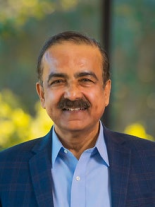
Adit D. Singh
Auburn University
Adit D. Singh is the Godbold Endowed Chair in Electrical and Computer Engineering at Auburn University and a globally recognized authority in VLSI test, reliability, and semiconductor quality. Over a distinguished academic and research career spanning more than four decades, he has made pioneering contributions to defect-based testing, adaptive testing, and statistical methods for integrated circuit validation. A Life Fellow of IEEE, he has authored more than 300 technical publications, holds internationally licensed patents, and has served in numerous leadership roles across the global semiconductor test community.
His extensive research, industry collaborations, and deep involvement in advancing test methodologies have provided him with unparalleled insight into the challenges of test escapes and timing-related failures in modern semiconductor devices. Combining rigorous academic research with practical industry perspectives, he brings a uniquely authoritative view on improving test effectiveness and ensuring reliable operation of increasingly complex integrated circuits.
As semiconductor devices continue to scale in complexity and performance, test escapes have emerged as a critical challenge impacting product quality and system reliability. Despite advances in scan-based testing, cell-aware methodologies, and system-level test strategies, timing-related defects continue to evade detection, leading to operational failures and, in some cases, silent data corruption in large-scale computing environments. This tutorial provides a comprehensive examination of the root causes behind test escapes, the limitations of existing scan and system-level test methodologies, and the effectiveness of emerging timing-aware test approaches. Drawing on industrial production data and recent research, the session offers valuable insights into improving defect detection, enhancing test quality, and addressing the growing reliability challenges associated with advanced semiconductor technologies.